


Form 10-K is an annual report that publicly listed companies file with the Securities and Exchange Commission (SEC), which is used to provide financial performance and business information. This form offers an overall view of the business’s operations, financial conditions, and the company’s future outlook.
As it is created based on the Securities and Exchange Commission’s requirements and contains all financial information, you must know exactly what is a 10k. Let’s dig into the details of Form 10-K and why it is so important in this blog.

Form 10-K is an annual, comprehensive filing by public companies with the SEC that includes all information they have relating to their business operations and financial situation. It provides an entire company profile for the company throughout the fiscal year.
The report contains details on a company’s sales, costs, assets, liabilities, management, risk, and plans. A Form 10-K is a document used by investors to learn more about how a company functions and to determine if it is a financially stable company.
The SEC mandates that publicly traded companies submit Form 10-K so that investors can be provided with consistent and accurate financial information.
The Form 10-K is significant because it provides investors with a snapshot of a company’s financial results, risks, and general business health. It can be useful to investors in comparing companies and making investment decisions.
The report will enhance transparency by demanding disclosure of key information about companies’ operations. It is also useful for regulators to keep an eye on whether companies are complying with the financial reporting regulations.
An investor can use a Form 10-K to check out:
In short, investors can learn about a company’s strengths and weaknesses from studying its 10k.
Check Out: Top Hedge Funds in the World: Rankings, Strategies, and Insights
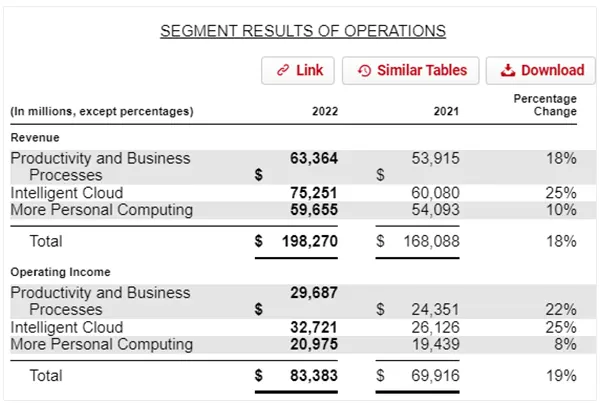
Form 10 K contains extensive details regarding a company’s business activities, financial statements, and risks. It is broken up into a number of sections, giving investors a comprehensive picture.
The key parts of a Form 10k are:
Every public company that registers with the SEC must file a Form 10-K each year. These firms will be required to disclose business finance and company data in order to remain in compliance with US securities regulations.
Generally, private companies are not required to provide financial disclosures for the public, and so do not have to file a Form 10k. Some private companies may opt to voluntarily file reports, however.
The filing requirement will help establish a uniform reporting system that will allow investors to compare companies with the same information.
Read Next: 60 Best Small Business Ideas in 2026: How to Overcome Challenges in Small Businesses?
A Form 10-K is not filed during a company’s fiscal year, but rather at the end of the fiscal year. The filing deadline varies based on the company’s filing type.
| Company Type | Filing Deadline |
| Large accelerated filers | Needs to file within 60 days after the FY end. |
| Accelerated filers | Needs to file within 75 days of FY end. |
| Non-accelerated filers | Needs to file within 90 days of the FY end. |
To meet SEC requirements, companies need to file the report within these deadlines.
A Form 10-K, along with an annual report, gives information concerning the annual performance of a company, but they have different functions.
| Basis | Form 10 K | Annual Report |
| What is the purpose | Used for SEC regulatory filing. | Used for shareholders’ communication. |
| Reported to | SEC | It gets distributed to shareholders. |
| What is needed for | Required for public companies. | Needed for annual meetings. |
| Content included | Financial and business disclosures. | Overview of the company’s financial performance. |
Form 10 K is a legal SEC filing, and an annual report is typically intended to be more reader-friendly.
A company’s Form 10-K is available on the internet via the SEC’s EDGAR database or the company’s investor relations website. To find a Form 10 K:
It is public and can be accessed by investors and researchers at any time.
Form 10K is submitted via the SEC’s EDGAR system. The report is prepared by the companies, examined by the company’s financial information, and filed with the SEC in accordance with the SEC filing rules.
Typically, the filing process will include:
Financial reporting software applications are used by many companies to organize data and file accurately.
Both SEC filings are called 10K and 10Q, but they are filed at different times and include different information.
| Basis | Form 10K | Form 10Q |
| Frequency of Filing | Filed annually | Filed quarterly |
| Period of Coverage | Full financial year | 3-month period. |
| Financial Statements | Audited | Doesn’t get audited. |
| Detail level | It is more comprehensive. | Much shorter update. |
There is a full annual report available in Form 10-K, and there are reports throughout the year available in Form 10-Q.
When investors read a Form 10-K, they should read the sections of the document that will give them the most useful financial and business information.
Start by reviewing:
All segments, when read together, give a better picture of any financial status and future growth prospects of a company.
Read Next: What is a Payroll Tax? Purpose, Key Components, Calculations, Example, and Payroll Vs Income Taxes
The form 10 k documents a company’s financial results, business activities, risks, and plans. It is an important SEC filing that can help investors, shareholders, and analysts better understand how a company is doing and to help them make informed decisions.
Reading a company’s Form 10-K will allow assessing the company’s financial well-being, determining possible risks, and gaining a greater insight into the company’s potential for future opportunities. This annual filing is also a critical aspect of transparency and accountability between companies and investors.
No, Form 10K and an annual report are different documents. Form 10 K is submitted to the SEC and provides a lot of information to the regulators; an annual report is prepared primarily for shareholders.
Form 10-K is filed by public companies every year at the end of the fiscal year.
A company’s Form 10-K is available at the SEC’s EDGAR database or on the company’s investor relations website.
A Form 10-K typically includes a company’s business overview, risk factors, financial statements, management’s discussion and analysis, legal proceedings, and other imporant disclosures.
Form 10-K is an annual filing with the U.S. Securities and Exchange Commission (SEC) that is mandated for all publicly traded companies in the United States. Private companies do not file the 10-K.
Sources:
Form 10-K for beginners: understanding corporate filings: By Business Insider
Form 10-K Filing: Wall Street Prep