


Using a credit card is like borrowing money from the card company. Paying your statement balance in full on time might allow you to avoid paying interest on purchases. However, if you continue to have a balance at the end of each month, you may end up paying a lot more for your purchases.
That’s where APR, or annual percentage rate, comes in.
Your credit card APR indicates the yearly expense of borrowing money with the card. Knowing what is APR on a credit card can give you an idea of the cost of carrying a balance, help you compare credit cards, and make better choices about borrowing. Let’s understand it in this blog!
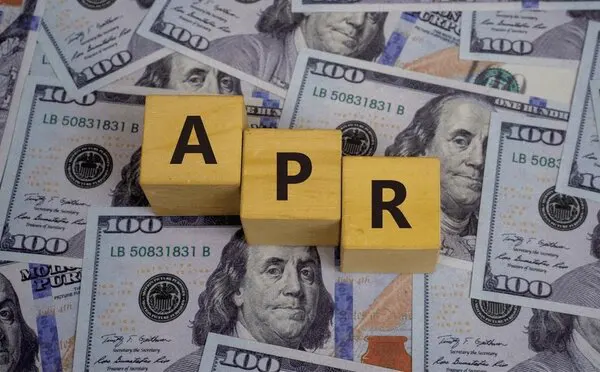
APR is an annual percentage rate. A credit card shows the annual percentage rate that you can use to calculate the interest to pay if you carry a balance.
Let’s say, for instance, your credit card’s APR is 24%. This does not simply mean that you will be paying 24% interest for every purchase. Typically, credit card interest is based on the periodic rate from the APR and the outstanding balance over the course of the period.
What’s important is that the higher the APR, the more expensive it will be to use the card for borrowing if you don’t pay off your balance each month.
The APRs for your account are usually listed in your credit card agreement and on your billing statements. Depending on the card, you might have varying purchase, cash advances, and balance transfer APRs.
The interest rate of your credit card is more important when you don’t pay off your full statement balance on time.
Suppose you have a $2,000 balance on your card, and the annual percentage rate (APR) is 24%. If you only pay the balance, the rest will start accruing interest, and you’ll end up paying more.
This is the calculation of what is APR for credit cards:
The interest rate is the periodic interest rate.
The monthly equivalent for a 24% annual rate of interest is about 2% (typical credit card companies calculate interest with a periodic rate, which is based on daily).
The actual interest you pay will vary based on your balance, the way the issuer calculates it, and the length of time you hold the balance.
Why does compounding matter?
Interest on a credit card can compound, which means that it gets added to the balance over time. Simply put, depending on the context and the method used by the issuer, interest that is earned can also be added to the outstanding balance that generates future interest.
This is why it’s so costly to carry a credit card balance over for a long period of time.
One card may come with more than one APR, depending on the way you use the card. Let’s go through them:
This is the APR for purchases if you carry a balance (purchase APR).
For instance, if you purchase a $1500 laptop but don’t pay the balance on your statement, the purchase APR may be applied to the remaining balance.
But a purchase APR does not mean that you’ll be charged interest monthly. Many credit cards come with a grace period on purchases, which is basically a period during which a credit card user can avoid the interest charges incurred on purchases by paying the full balance by the payment due date, either by visiting a bank or through electronic payment.
Some credit cards have a temporary introductory APR, which is sometimes as low as 0%.
These promotional rates may include a combination of purchases and balance transfers, depending on the card’s terms.
For certain short-term financing strategies, a credit card can be helpful, thanks to a 0% introductory APR. However, it is a good idea to verify:
Balance transfer APR is used for transferring the balance from another credit card or account to a new one.
Some cards have a promotional balance-transfer APR for a certain amount of time. This may mean that you save some interest costs as you pay down debt.
But there’s a fee for balance transfers, and the introductory APR will ultimately end. Don’t only consider the advertised initial rate; you should take into account the total price.
The cash advance APR will come into effect if you decide to take out cash from your credit card by using an ATM or any other cash withdrawal method.
Many cash advance loans can come with a higher APR than cash purchases and may also not be eligible for grace periods like regular cash purchases. There may be a cash advance fee as well.
Therefore, it’s a good idea to be aware of the conditions prior to withdrawing cash via a credit card.
There are credit card companies that have a penalty APR that can trigger if there are certain bad payment practices, like failure to pay as per the credit card contract.
Penalty APRs can be quite high compared to the normal purchase APR. The terms of the card should outline when a penalty APR could kick in and how and when the borrower may be able to get back to a lower APR if they do.
Checkout: Top 15 Green Startup Companies In 2026: A Complete Guide To What They Offer
Provided you always pay your bank statement balance in full and on time, the impact of your purchase APR may be negligible when it comes to the interest you’ll incur on your regular purchases.
For instance, you spend $1000 over a billing cycle, and your card will charge you 25% APR when you make purchases. If you pay the balance of the statement due on time, and you get the grace period for the card, you may not pay any interest for purchases that you make during that period.
However, if you only pay the balance, the rest will start accruing interest on your card’s terms.
So for those who are using a credit card on a frequent basis, the APR is more important.
APR and interest rate are related, and on credit cards, they might be used virtually synonymously, but they are different.
An interest rate is the percentage that will be applied to the amount of money borrowed. APR is supposed to give a more comprehensive view of the cost of borrowing and may include some fees.
This can be more important for items like personal loans or mortgages, as borrowers might have to pay a number of initial fees. Credit cards, on the other hand, will likely have a similar or identical APR and interest rate, as they don’t have any of the same up-front financing charges.
APR can serve another important purpose. It provides a common metric for consumers to compare credit products.
For instance, when you’re considering whether to take out a credit card loan or a personal loan for a big purchase, you may be misled by the interest rate alone. There may be other costs associated with a loan that would contribute to the overall cost of borrowing. A comparison of the APRs can offer a more complete comparison of the two options.
However, for credit cards, you should still be considering more than just APR and include annual fees, balance transfer fees, cash advance fees, rewards, and account terms.
With credit card debt, interest charges can add up as long as you have some left on the balance.
If you have a large balance and a high APR, you may find that if you only pay off the minimum amount, you are paying a lot of interest rather than paying down the original amount of the loan.
The interest on the debt keeps building as the balance is still outstanding.
However, if you have credit card debt, this doesn’t mean you should panic. It means that when it comes to repayment choices, knowing your APR could make a difference.
The interest rate on a credit card helps you understand the cost of borrowing when you’re considering paying off a credit card with a high interest rate versus buying a new item using the same credit card.
Your creditworthiness can affect your credit card APR.
When applying for a credit card, the lenders typically check your credit and financial profile details. Different rates within a range are given depending on the card.
While a higher credit score does not guarantee a particular APR, in general those with a stronger credit profile will have better prospects for securing better credit terms.
Let’s check out the factors that affect credit card APR here:
APR is the yearly cost of taking out a loan with your credit card. This matters more if you have a balance to pay, as interest can accumulate to a considerable extent on the total amount you pay.
It may seem a little confusing at first, but the general rule is that the higher the APR, the higher the cost will be to carry a credit balance.
When selecting a credit card, check the card purchase APR, any promotions, balance transfer conditions, cash-advance APR, fees, and other expenses. If you already have a card, you’ll be able to grasp the real price of debt by knowing your APR.
A lower APR generally is a better choice, particularly if you will be carrying a balance. If you have the means to pay a statement balance in full monthly, however, the APR may not be as significant, as you can typically avoid interest on qualifying purchases.
As a rule, interest charges on purchases are avoidable if you have a grace period on your card and you pay off your statement balance by the due date. Some transactions may have alternative terms, like cash advances.
While it may be possible to get a lower rate, that doesn’t mean it will be granted, so review the terms of the entire card offer before leaping.
Sources
What is APR? – By Wells Fargo
How Does APR on a Credit Card Work? – By Space Coast Credit Union