

Running a business includes more than just tracking sales, costs, and payments. It is also important to ensure that the transactions in your accounting system match those in your bank statement. This is where bank reconciliation can help.
Bank reconciliation is a normal accounting task carried out to match a company’s records within its accounting system with its financial records from the bank. Where the two balances are equal, the reconciliation process helps explain why it may just be a timing difference, or it may be an accounting difference.
We will discuss more about account reconciliation in this blog!
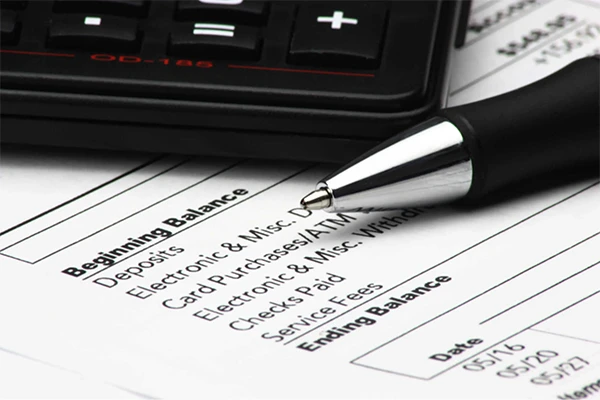
Reconciling a bank is a way of matching a period’s transactions and balances to the bank’s reporting of those transactions and balances during the same period.
Ideally, the adjusted balance in the company’s books should correspond with the adjusted bank balance. However, the differences are natural, as the business and the bank may be processing the transaction at different times.
For example, a company may make a payment to another company and make the entry in the books at the time of payment. Several days after making the transaction, it might show up in the company’s books but not yet on the bank statement if the supplier has not issued or processed the payment.
Similarly, a bank might pay a service fee or credit interest prior to the business entering the transaction into its accounting system.
Reconciliation is not just about matching two numbers; it’s about aligning two numbers to the same quantity to recognize, describe, and account for all differences.

Keeping accurate cash records is a crucial part of financial reporting and day-to-day decision-making. A company may think it has a lot more cash on hand than it does, which means that it can make wrong payment or spending decisions.
Bank reconciliation is a process that can benefit businesses regularly when there is regular reconciliation:
The better the value of reconciliation, the more transactions it handles. A company that handles several hundred transactions per month will have many more errors than a company that only handles a few transactions.
There is no penalty for a discrepancy between the bank statement and accounting records if someone did not make a mistake. Some discrepancies are due to the normal processing time.
The following are common reconciling items:
A clear and uniform process facilitates reconciliation, and it helps prevent the loss of a crucial transaction.
Begin with the bank statement and the accounting records for the period to be reconciled.
Supporting information can be any of the following, depending on the business:
It’s crucial to use records from the same period as the statement date because transactions that took place after that date might cause other discrepancies.
Review the bank statement and reconcile transactions to the company’s books. Balance deposits, withdrawals, transfers, payments, and other credits and debits. Identify transactions where there are two or more records to look at later and see what is happening.
When comparing amounts and transaction dates, it may be helpful to compare these instead of only relying on the description, as the wording may be different in the bank than in the accounting system.
After the matching process is done, review all unmatched transactions.
See if the difference is
A transaction by someone you don’t know or are not authorized to do.
It is important to note the differences, as not all reconciling items should be recorded in a journal.
An exceptional payment, for example, will just need to be watched till it is paid. The fee, which is not recorded in the accounting records, however, is usually recorded.
Adjust the books so that they reflect legitimate transactions that have been on the bank statement but are not reflected in the books.
This may be bank fees, interest earned, bank returns, or any transactions that have been processed by the bank.
Make corrections for any bookkeeping errors found in the review. When a transacted amount is not familiar, don’t simply write down an adjustment, but find out what it is.
Once all the necessary adjustments are complete, compute the adjusted balances.
Differences after this should be due to legitimate timing variations such as deposits in transit or outstanding payments. If the adjusted book balance and the adjusted bank balance match, then the reconciliation is complete.
Record the reconciliation and keep the documents for future reference.
Check Out: What Does Accounts Payable Mean? – Example, Best Practices, and More
Suppose the business has $25,000 in its bank statement and the accounting books reflect $24,300 in the business.
In reconciliation, the accountant checks for the following:
The difference in timing is taken into account in the bank balance:
The book balance is then updated for any transactions that the bank has already processed:
In this example, the balances still don’t agree, and there is a difference of $300. This means the reconciliation process is not completed. The accountant should not make the figures add up.
An important principle of reconciliation is that a difference that has no explanation should remain an item of investigation until the cause of the difference is determined.
There is no single number or frequency to determine what is best. For a small company that does not have a lot of transactions, monthly bank reconciliation might be sufficient. Weekly or even daily reconciliation might be more suited for businesses that are making payments often, have multiple accounts, have a high number of transactions, or have a short cash-flow cycle.
The more often it gets reconciled, the fewer transactions will have to be investigated simultaneously. Plus, it also reduces the window of opportunity between the occurrence of an unusual transaction and its discovery.
However, consistency is important regardless of what kind of schedule a business decides on. An infrequent reconciliation is not as helpful as a well-stated procedure employees should follow at each interval.
While performing the reconciliation regularly, there are some errors that can make the reconciliation less effective.
A frequent error is considering all differences as errors. Banking and accounting are time-sensitive processes, and timing differences are expected and should be identified and tracked, not improperly changed.
Another is not conducting a review of reconciling items. When a payment has been outstanding for an unusually long period of time, it may suggest a bookkeeping issue, payment cancellation, or another issue that needs to be addressed.
It is also a bad idea for businesses to make arbitrary changes to ensure balances match up when they don’t. Each adjustment should be accompanied by an explanation and, if applicable, documentation.
Last but not least, the reconciliation process should not be seen as simply an administrative procedure. Any patterns found during the reconciliation process can indicate problems with payment procedures, recordkeeping, and internal controls.
Here are a few simple tips to improve the reliability and speed of the process:
Bank reconciliation is not just a monthly reconciliation of two balances. It’s a fiscal management device that allows companies to see where their cash is and whether their books are correct with their banking activity.
Regularly comparing transactions helps businesses ensure that transactions are free of timing errors, that they are recorded correctly, that certain adjustments are recorded, and that transactions that cannot be explained are investigated.
Read Next: Going Concern Assumption: Meaning, Principle, Examples, and Importance in Accounting
In accounting, reconciliation of accounts is the comparison of two sets of financial records to determine and correct discrepancies. It helps to ensure transactions and account balances are accurate, complete, and properly recorded.
Ensure that the bank statement matches the accounting records, look for any mismatched transactions, and investigate any discrepancies. If any fees, interest, or errors are missing, enter any adjustments and then verify that the adjusted balances agree.
It can analyze bank activities and match them with the anticipated business transactions to detect suspicious or unauthorized transactions. If there is any activity that is not explained, it should be investigated immediately.