


Revenue is one of the most crucial financial indicators of a business. It indicates the profit or income that a company generates from selling goods or services or from engaging in other means of providing income before expenses are subtracted from it. By monitoring revenue, businesses can assess their sales performance, discover growth opportunities, and make informed financial decisions.
This guide will discuss the revenue definition, how to measure it, and its various types in financial statements. So, let’s dive in!
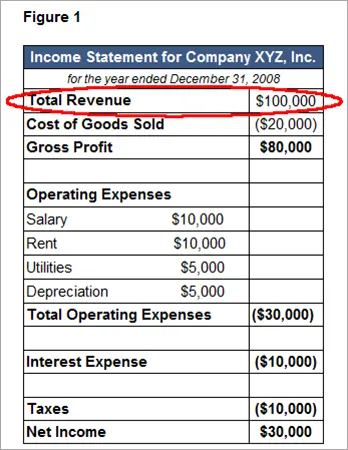
Revenue is the total income generated by a business before any costs have been subtracted from it over a given period of time. It is the main source obtained from selling products or services to buyers and, for this reason, is also known as the top line, since it is typically the first line listed on an income statement.
For example, a clothing business has revenue from selling shirts, jeans, and accessories. A consulting firm would make money by charging clients a fee for professional services, and a software company would make money from software licenses and subscriptions.
Revenue can be measured on a monthly, quarterly, or financial year basis. Companies track these numbers to see how sales are going, to track the performance from one period to another, and to determine if their product or service is in demand.

Revenue is a good indicator of the company’s ability to make sales and operate. It also assists in measuring business performance for business owners, investors, and lenders.
Here are some reasons why revenue is important:
While the revenue growth seems positive in general, it is also necessary to consider the expenses and cash flow to gauge the company’s financial health.
Revenue is segmented by businesses based on the source and purpose of the revenue in relation to their core activities. The traditional difference between the revenues is between operating revenue and non-operating revenue.
Operating revenue is the revenue a company obtains from its main revenue-generating activities. It is the income generated from the products or services that the company typically sells.
For instance, a bakery’s operating revenue is the money it makes from its bread, cakes, pastries, and other baked goods. Likewise, a software business generates operating revenue by selling software licenses, software subscriptions, or services.
These are especially good for assessing the performance of the company’s core business, as they reflect the effectiveness of the company’s ongoing operations in generating sales.
Non-operating revenue typically includes any revenue that comes from non-core business finance activities. These amounts could be reported as non-operating income or income gains instead of revenue from customer contracts, depending on how the accounting is treated.
Examples include:
For example, the bakery’s principal revenue is from the sale of baked goods. The interest that it collects on its savings is a second source of income, rather than coming from its primary baking business.
Separating operating and non-operating items is important for stakeholders to understand the proportion of a company’s performance generated by its normal operations.
Also Read: Ledger Definition: Know What a General Ledger Is and Its Importance in Running a Business
The simplest formula for calculating revenue is the amount of money generated when goods and services are sold.
It is a formula used to determine the gross sales of all units when no deduction is applied, and the units are sold at the given price. There are other factors that must be taken into consideration when calculating a business’s net sales tax revenue, such as applicable discounts, returns, and allowances.
Net Revenue = Gross Sales − Discounts − Returns − Sales Allowances
Here,
It will depend on the business model and accounting rules that apply to the transaction.
Revenue is the key component in financial reporting and plays a role in the explanation of how a business generates earnings and how the earnings impact the business.
Revenue is usually listed at the top of the income statement and is therefore known as the “top line.” The statement then subtracts expenses to yield the company’s gross profit, operating income, and net income, depending upon the presentation.
This is a simplified example, which demonstrates the difference between revenue and profit. The company has $100,000 in revenues, but when the listed costs and expenses are subtracted, the remaining revenue is quite small.
While the revenue goes up and profit remains unchanged, the company might need to explore rising production costs, marketing costs, wage costs, and other costs.
The revenue line is not a typical line item in the balance sheet, but transactions that create revenue will impact accounts on the balance sheet.
If a business makes a sale and collects the money right away, it’s likely that cash would increase. If it sells goods for credit, it can incur accounts receivable instead.
Retained earnings are also indirectly related to the revenue via net income. It may lead to profits that are retained within the business, subject to distributions, etc.
These relationships are useful to a business to determine the impact a sales activity has on assets, receivables, and its overall financial position. Cloud bookkeeping services can help maintain these records.
Revenue recognition is the process of assigning revenue to the financial statements of a business. The timing will vary depending on the accounting method and accounting standards.
Accrual accounting treats revenue as earned when it is due and allows the income to be recognized even if it has not been collected. With a cash basis accounting method, revenue is typically realized when cash is collected.
For instance, a consulting firm does a project in December and gets paid in January. If the requirements have been met, under accrual accounting, it could recognize the revenue in December. Instead, it is typically included in its revenue on a cash basis in January.
ASC 606 has 5 steps to its revenue recognition framework for businesses reporting under US GAAP:
This framework assists companies in consistently reporting income from delivery of goods or services to customers. Businesses operating across borders may also need international tax services to address related tax obligations.
Accrued and deferred revenues are two instances of the timing of revenue recognition and revenue collection.
Accrued revenue is revenue that has been earned, but not billed or collected, as appropriate. For instance, a consultant can finish its job and not be paid by the client.
Deferred revenue is a type of revenue that appears on the balance sheet when a business takes the cash before it has provided the goods or services. For instance, a consumer can perhaps pay for an annual subscription to software beforehand. The business generally records the amount as revenue when it has undertaken its service commitments.
In accrual accounting, deferred revenue will typically be reported as a liability until the performance obligations are met.
The terms “revenue,” “income,” and “profit” are financial terms that are related but are not interchangeable.
Revenue is the money made from a business before any expenses have been subtracted. Profit is a measure of the remaining after relevant costs and expenses have been deducted. Depending on the context, income can be defined as a variety of things, such as net income.
A company makes $200,000 in total revenues and has total expenses of $150,000. Those expenses may include wages managed through payroll services. If there are no other items, its net income will be $50,000.
| Basis | Revenue | Income | Profit |
|---|---|---|---|
| Definition | Revenue definition is the total amount a business earns before expenses are deducted. | It is the total earnings, including extra income and revenue. | It is the amount that is left after all the expenses and deductions. |
| Calculation | Sales price multiplied by the number of units sold | It varies depending on the types of income. | Total revenue minus total expenses |
| Expenses | Includes operating costs and taxes | It can be calculated before or after expenses are deducted. | It is only calculated after deductions are made. |
| Purposes | It tells the company’s sales performance. | It helps to see the complete amount the business generates. | It shows if the business is running at a profit or a loss. |
This is an important difference because a company can make lots of money even if it does not make a lot of profit. Revenue is a measure of its monetary gains, and profit is what is left after deducting the relevant costs and expenses.
A business’s revenues and cash flows are two different things. Revenue is the total amount received from sales and other revenue sources for which there is a clearly defined basis in the ordinary course of the entity’s operations. Cash flow is the flow of cash into and out of a business.
A company can recognize a credit sale as current revenue although the customer may not have paid the sale value. Then, you can see that it is possible to have some revenue growth without any cash change until the customer pays for it.
In a similar manner, a company that is paid in advance could have a cash increase prior to it realizing the value of the patent as income.
The revenue and cash flow should be evaluated together; therefore, businesses need to explore them. Electronic payment methods can affect when cash is received, without necessarily changing when revenue is recognized. Revenue is used to assess sales performance, and cash flow to monitor liquidity and the company’s financial responsibilities.
To increase revenues, sales, customers, and opportunities to create added value from existing products and services need to be improved. The best tactics will vary depending on the business sector, the audience, and their financial objectives.
New products or services can extend a business’s reach to new customers and satisfy evolving customer needs. A clothing company might add accessories, for example, or a consulting company might sell special bundles of services.
New offerings must be in response to customer demand and the company’s capability.
Marketing can be used to help businesses target their customers and to let their customers know what they are offering. Optimizing your website for search engines, implementing email marketing, leveraging social media, and adopting referral marketing initiatives can enhance your visibility and help attract customers.
Measuring which channels are driving sales, and not just measuring campaigns for reach or engagement, will be a very important aspect of business. CFO services can support revenue forecasting and financial planning.
An easy purchase, helpful customer service, and quality products can be a boon to repeat sales and referrals. Keeping your customers is also likely to limit your dependence on new customers.
Gatherings of customer input can be useful in determining customer issues that may be impacting sales.
Upselling is designed to get customers to select an upgraded product or service, and cross-selling suggests a product or service that complements the first.
For instance, a software company may have an optional subscription that has some extra features, or an electronics retailer may have accessories that work well with the specific product.
These strategies can significantly raise the average transaction size when the suggestions actually comply with the customers’ requirements.
Prices impact both the revenue and the demand for the product. Businesses can check their prices, add product bundles, offer various service levels, or change prices based on the customer’s preferences and the value they see in the product.
Raise the price, not necessarily to increase revenue. If the price increase reduces total sales to a large degree, total revenue could actually decrease.
Once businesses have evaluated pricing changes based on sales volume, customer feedback, contribution margin, and profitability, they need to decide whether to increase or decrease the prices.
Read Next: Stock Definition, How They Work, and Best Stocks to Invest in Right Now
Revenue is essential to any business because it indicates the income that a business made from its activities over a given period. The knowledge of the revenue types, how they are calculated, and how they’re treated in accounting can make understanding financial statements better.
However, revenue does not tell the whole picture. Profitability, expenses, and cash flow should also be considered, as they will tell the business if the profits are going to continue. As we have explained all about revenue in this blog, we hope this information will be helpful to you.
The terms “revenue” and “sales” are often confused when talking about business operations. But it is possible that revenue can be a broader accounting term, depending on the business and the accounting presentation. Sales are the transactions, while reported revenue is based on the appropriate accounting principles.
Yes, if a business has high operating costs, production costs, interest, or taxes, it can make great revenue, but these financial obligations can account for low profit.
The revenue is generally posted on an income statement. The transaction can also impact cash, accounts receivable, and other balance sheet accounts depending on whether payment has been received.