


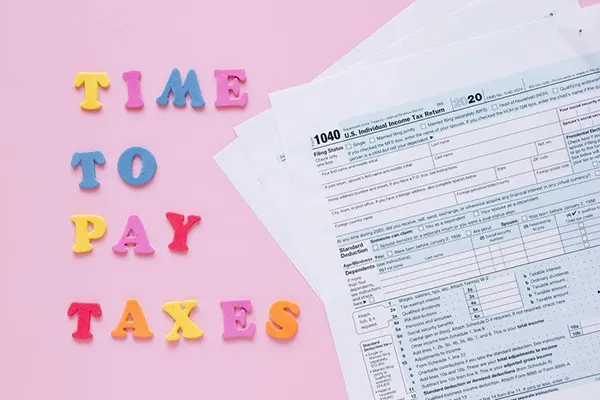
Partnerships have filed over 4.5 million extensions and have around 30 million partners for Tax Year 2023 (IRS statistics). Individual partners are liable for their own personal and business taxes. Taxpayers can apply for an extension on both individual and partnership returns using Form 4868 and 7004 if the deadline is approaching and they need more time to get their financial records in order. This can be done provided that they meet the IRS requirements for both forms.
Separate Forms for Separate Returns
People expand their own Form 1040 with Form 4868. Businesses raise their returns with Form 7004, which covers partnership returns on Form 1065, S corporation returns on Form 1120-S, C corporation returns on Form 1120, and several others. The IRS instructions for Form 7004 direct filers to present a separate proposal for each return they want extended. An owner of two commodities who files two business proposals in complement to the personal one.
Each form names the return it protects, and the IRS treats the business and personal requests as irrelevant. An owner who files only Form 7004 in March and assumes the 1040 is regulated is without a personal extension on April 15.
Due Dates by Entity Type
Partnership and S corporation returns for a calendar year are due March 15. In 2026, that date fell on a Sunday. The 2025 returns were due March 16, and a timely Form 7004 moved them to September 15, 2026. Under the instructions, Form 7004 should be submitted by the deadline of the return it extends, and for a 2025 partnership return, the request and the return were both due on the March 16 date. C corporation returns are due April 15, the same day as particular returns, and the automatic extension is given for both returns six months, to October 15.
C corporations with a tax year ending June 30 that began before January 1, 2026 will have an extension of seven months, and for tax years beginning in 2026 that extension drops to the standard six months.
For 2026 returns, filed in 2027, none of the dates fall on a weekend. Partnership and S corporation returns are due Monday, March 15, 2027, with an extended date of Wednesday, September 15. C corporation and personal returns are due Thursday, April 15, 2027, with an extended date of Friday, October 15.
A C corporation owner can apply for both requests on April 15 and will meet both deadlines. A partner or S corporation shareholder cannot wait that long for the business proposal, which is due a month earlier. Form 4868 has no earliest filing date, though, and that owner can file the personal extension in March alongside the business one.
Filing Both Requests Together
How do I file a tax extension? For an owner of a pass-through entity, it takes two submissions: Form 7004 for the entity and Form 4868 for the individual, each sent before its own deadline. Sending them together in March is allowed, and it removes the risk of recognizing one and overlooking the other a month later. The partnership or corporation files Form 7004 under its own determining number. A minority owner has nothing to do with that business extension and handles only the personal one.
The two requests are related in practice even though the IRS processes them individually. A partnership that extends its return to September 15 can offer its Schedule K-1 forms as late as that date. Its partners then have around 30 days before their own extended deadline, and a precise personal extension depends on the K-1 figures. An extension at the business level makes an extension at the personal level close to unavoidable for every owner who depends on that K-1.
Payment Rules on Both Returns
Both forms give more time to file and leave the payment deadline in place. The Form 7004 instructions state that the extension does not extend the time to pay any tax due, and Form 4868 has the same limitation for personal returns. A small business organized as a C corporation that owed tax on its 2025 income had to pay it by April 15, 2026, regardless of the extension.
Partnerships and S corporations are pass-through businesses. They usually owe no federal income tax at the entity level, and their income is taxed on the owners’ returns. For those businesses, Form 7004 is a request for time with no extension in payment. The assessment on each owner’s Form 4868 has to contain a reasonable figure for the business income the K-1 will ultimately report. Leaving that income out of the April estimate means interest on the shortfall from April 15 forward. As a representative, a partner desiring $50,000 of K-1 income who is taxed at a 24% marginal rate should count about $12,000 of federal income tax to the assessment, and the prior year’s K-1 is the usual initial moment when the current one has not reached.
Sole Proprietors and Single-Member LLCs
Some owners have one extension to file. A sole proprietor reports business income on Schedule C, which is part of Form 1040, and one Form 4868 extends both the business and personal figures. A single-member LLC with no corporate election is treated the same way. The IRS will ignore the entity, and its income appears on the owner’s return. Form 7004 plays no part for these owners.
A single-member LLC owned by a foreign person is the exception. It must file Form 5472 with a pro forma Form 1120, and the instructions for Form 5472 state it may request additional time on Form 7004 under the Form 1120 code. That owner files a business extension even though a domestic owner of the same LLC would not.
An LLC with two or more members is a different case. Without a corporate election, it files a partnership return on Form 1065, and with an S corp election it files Form 1120-S. The LLC uses Form 7004 in both scenarios, like any other partnership or S corporation.
The members then complete their own extension on Form 4868, which moves each member’s deadline to October 15 and puts a multi-member LLC owner in the same two-request position as any other member.
The 30-Day Margin
An owner who asks the partnership for an estimated K-1 figure in March can build the April estimate on it and use the autumn for matching numbers against the final K-1 rather than creating the extension from nothing. The time available for that review, between the September 15 business deadline and the October 15 personal deadline, is 30 days.
FAQs
If I extend my business taxes, will my individual taxes be extended?
No. A business tax return may be extended using Form 7004. An individual’s income tax return may be extended using Form 4868.
Can I extend my individual taxes without extending my business taxes?
Yes. If you only require additional time to complete your individual Form 1040, you can apply for Form 4868. If you have any other returns to file, such as a partnership or corporate extension, then you will require a separate application for an extension of those returns.
Will I avoid any penalties if I extend my taxes?
If you have a valid extension, then you generally won’t be charged a late filing penalty. Interest and potential late payment penalties will still be charged if you do not pay your tax.