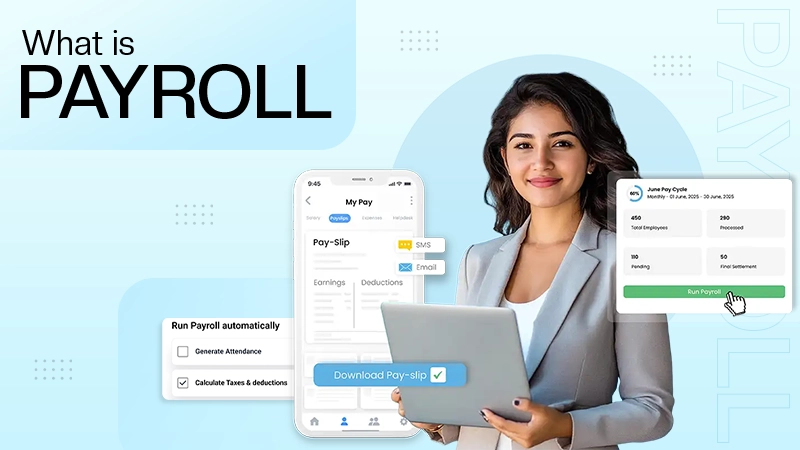


Payroll is a vital part of any business. Whether a company is large or small, or is in any other industry, workers want to be paid correctly and in a timely manner. A well-managed system will ensure that salaries, wages, bonuses, overtime, and deductions are correctly computed and that legal and tax laws are followed. Payroll is much more than just a payment processing system; it is a key component of employee satisfaction, financial planning, regulatory compliance, and organizational efficiency.
In this article, we will dive deep into the nuances of payroll, explaining its significance and how it is evolving in the future.

Payroll is the system whereby an employer pays their employees for their work for a pay period. It includes the ability to make calculations for gross earnings, apply deductions and withholding tax, make payments, and keep good records.
It isn’t just about issuing paychecks but includes a number of administrative, financial, and legal roles; these include the following:
Regardless of whether they are paid weekly, biweekly, semimonthly, or monthly, it ensures that compensation is provided in a timely and correct manner.

Payroll management is beneficial for both employers and employees. Its significance can be reflected in employee satisfaction, legal compliance, financial accuracy, business reputation, and operational efficiency.
Check Out: Inheritance Tax: Who Pays It, Common Mistakes, and Importance
The key components of payroll include gathering employee information, calculating gross pay, computing the accurate deductions, finalizing net pay, and reporting final taxes.
Employee information includes key employee records such as contact details, tax forms, banking information, etc. Throughout the process, accurate files keep salary processing legally compliant, withhold taxes accurately, and support the administration process.
Gross pay is the total amount of money you earn before taxes and deductions are taken out of your pay. It covers the base pay as well as any additional money you receive, like bonuses and overtime.
*Taxes and deductions are based on gross pay.
When it comes to salary deductions, they directly affect your paycheck, as they cut gross wages down to take-home pay. You can manage your personal finances accurately if you know what all compulsory taxes and deductions you have.
Common deductions include:
There are both compulsory and voluntary deductions.
Net pay, which is also referred to as ‘take-home pay’, is the amount of money that workers receive after deductions are made.
Formula:
Net Pay = Gross Pay – Total Deductions
Generally, employees are aware of net pay since it’s the amount of money that’s deposited into their bank accounts.
Employers are responsible for computing, withholding, and reporting taxes as required by law.
Payroll taxes may include the following:
Proper income tax management can mean the difference between saving and losing money and getting into trouble.
Check Out: Top Hedge Funds in the World: Rankings, Strategies, and Insights
The workflow is structured and helps to keep it accurate and compliant with the following 7 steps.
Step 1: Gather Employee Data
The finance department collects data about the employee that includes:
Having accurate data reduces errors.
Step 2: Calculate Gross Earnings
The employer works out how much each worker makes, according to the terms of a salary agreement, hours worked, overtime hours, commissions, and bonuses.
Step 3: Apply Deductions
The finance staff withholds taxes, insurance, retirement benefits, and other deductions, as approved.
Step 4: Work Out the Net Salary
Once deductions are done, the system determines the salary of the employee that will be paid to him.
Step 5: Process Salary Payments
Payments are made via:
Direct deposit is convenient, secure, and efficient, which is why many organizations choose to offer direct deposit.
Step 6: View Payroll Reports
Payroll reports are extremely important for accounting purposes, tax reporting, audits, and management decision-making.
Typical reports include the following:
Step 7: Keep Payroll Records
Retention of salary records for legal, tax, and auditing reasons. Good documentation can prevent arguments and assist in regulatory compliance.
You can choose a system type based on the size of your company and the budget you want to use. These types include manual ones, software programs, and outsourced ones.
Manual payroll is the process of doing calculations on spreadsheets or from paper records.
| Advantages | Disadvantages |
|---|---|
| Low initial cost | High risk of errors |
| Ideal for really small businesses | Time-consuming |
| Difficult to scale | |
| Greater compliance risks |
Payroll software streamlines calculations, deductions, tax reporting, and payslip production.
| Advantages | Disadvantages |
|---|---|
| Increased accuracy | Can be a bit costly for small businesses and startups |
| Faster processing | |
| Automated tax calculations | |
| Employee self-service portals | |
| Secure record management |
Some companies outsource dedicated service providers to help them handle their payroll and reduce the administrative burden.
| Advantages | Disadvantages |
|---|---|
| Low administrative burden | Can be challenging to find the right professionals |
| Professional compliance support | Costly option for small or mid-sized businesses |
| Improved accuracy |
Managing employee pay is not an easy task, and it has its own set of challenges, like keeping up with regulatory changes, avoiding payroll errors, and maintaining data security.
One of the most crucial areas of payroll management is compliance. Companies of all levels need to make sure that they:
The failure to comply can include audits, government notices, monetary fines, lawsuits, and reputational harm.
Payroll is more than just a regular administrative chore; it’s a core business activity that affects employee satisfaction, financial correctness, and legal adherence. Providing accurate and timely wages creates a sense of trust, boosts employee morale, and helps maintain a positive reputation for the organization as an employer.
We have explained all about payroll in this blog, and we hope it has cleared all your doubts.
Read Next: Going Concern Assumption: Meaning, Principle, Examples, and Importance in Accounting
Payroll management is the process of computing employee salaries, deductions, bonuses, and taxes. It guarantees that all staff members are getting paid correctly and in a timely manner, and it helps them to remain compliant with the rules.
Payroll accounting involves the documentation of payroll costs, wages, taxes, and benefits in a business’s payroll accounts. It assists in maintaining the accuracy of books and assists with financial reporting.
Payroll compliance helps ensure that your business is in compliance with labor laws, tax rules, and other statutory requirements.
Sources:
- What is Payroll? Definition, Process & How It’s Calculated – By Oracle NetSuite
- What is Payroll? – By Xero