

A bank statement is a financial document that shows all transactions that have been performed by an account over a certain time span. It offers information on deposits, withdrawals, payments, fees, and account balances, allowing individuals and businesses to monitor their financial activity.
These are also regularly used for loans, taxes, rents, and other financial procedures as evidence of financial activity.
Knowing how to review a bank statement and what it contains can help you get a better handle on your finances, especially when working with professional CFO services to improve financial planning and reporting.
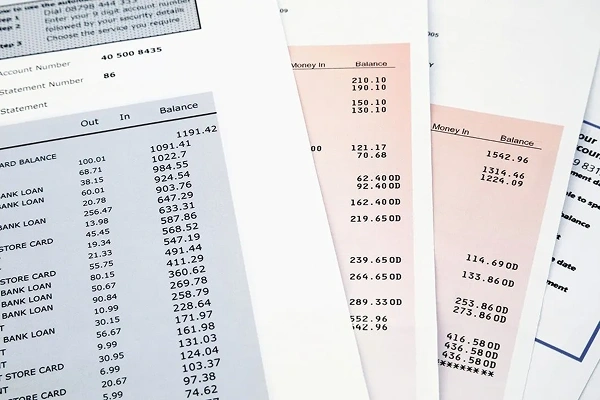
A bank statement is a document issued by the financial institution and includes every transaction made, balances, and account activity on the account for the indicated period.
It is a report of the account balance and shows the customers the status of the money that flowed in and out of their accounts.
A normal report will have:
Most financial bodies issue these documents on a monthly basis, but reports can be issued for certain periods or dates upon request. Nowadays, many of them have digital statements that are available online and through mobile apps.
The statement is significant as it enables people and businesses to monitor their finances, verify transactions, and keep accurate financial records.
These give account holders insight into the account’s activity and allow shareholders to make sound financial decisions.
Bank statements are used by individuals and businesses to maintain orderly financial records for accounting, budgeting, preparing taxes, and ensuring accurate sales tax services compliance.
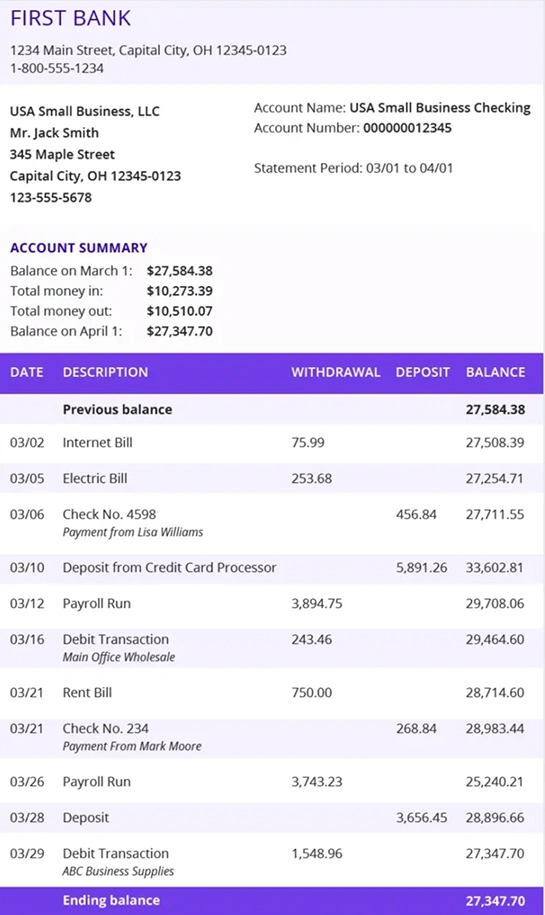
A financial report contains information about accounts, transactions, account balances, fees, and other financial information on an account.
While some will have different formats in various banks, most will include the following information:
You can get the report via online service, mobile app, branch, or you can ask your account representative.
There are several ways to obtain a statement, such as:
These documents serve as a record of financial activity, a record of managing the finances, and proof of transactions or income.
Common uses include:
As these reports generally include the account holder’s name, address, and account records, you can use them as your proof of address.
These are the official documents provided by the financial institutions, and all the other companies and institutions accept them.
However, the requirements differ, and some organizations may require a statement from a recent month or a particular format.
The reports should be retained for as long as necessary for financial records, tax, or legal purposes. However, in general it is recommended to keep the records for 3-4 years and even 5 years if you are required to maintain a longer financial history, particularly for a loan, investment, or tax payment.
People can retain statements to:
Statements are kept longer by businesses for:
The digital copies will be stored securely for future access.
The money is stored in an account, and the report is the document that shows the transactions that have been conducted on that account.
Although the two are linked, they are used for different purposes.
| Bank Account | Bank Statements |
|---|---|
|
|
Check Out: Inheritance Tax: Who Pays It, Common Mistakes, and Importance
There are various types of statements for business, personal, electronic, and credit cards. Each type has its own purpose in regard to the account and financial activity.
A personal one is a bank statement issued to an individual for their personal checking or savings.
It helps individuals to record the following:
A business documents the business transactions that have occurred in a company’s account.
An electronic statement, also called an e-statement, is a digital statement delivered electronically.
Customers have access to it via:
A paper statement will be printed by the financial institution. Although not as popular today, some people still want a hard copy for their files.
The information on a credit card statement includes information about the credit card account, such as:
Errors on statements include inaccurate changes, deposits that are missing or unrecorded, duplicate payments, or unauthorized payments.
Some issues to look for include:
Notify your financial lender if you notice any mistakes as soon as possible.
A bank statement is a crucial financial record that aids individuals and organizations in comprehending their transactions. Regular review of statements allows account holders to monitor spending, detect errors, deter fraud, and control finances.
Knowing how bank statements work can make savvy financial decisions for anyone, whether they are managing their own finances or those of a business, including organizations handling cross-border operations with the help of international tax services.
Read Next: Going Concern Assumption: Meaning, Principle, Examples, and Importance in Accounting
You can get it by logging into your bank’s online banking portal or mobile app or by visiting a bank branch. Typically, you can download or request statements at any time from most banks.
It is a report that displays your bank activity, such as a bank balance at a certain time, withdrawals, payments, fees, and deposits.
You can download it by logging on to their online banking account and then selecting their bank account and the statement or e-statement option.
You can view your report via online banking, your bank’s mobile app or ask your bank for a copy.
Yes, most banks offer instant access to their digital report via online banking or their mobile app once the statement period has been released.