

Need Professional Help? Schedule Now

Balance Sheet: Meaning, Importance, Equation, and Balance Sheet Sample

Reviewed By Biana Hickey
Last Updated: April 22, 2026
Blogs
d-Balance Sheet

A balance sheet gives a picture of the financial health of a company at a given point in time. The balance sheets, unlike the income statements, indicate what the business owns, what it owes, and the value that is owned by the owners. Businesses often rely on professional guidance like financial consultant services to better understand these statements.

Whether the business is big or small, it is a crucial part of management to measure liquidity and financial stability for the investors and creditors. Many companies also use cloud bookkeeping services to maintain accurate and real-time financial data.

In this article, we will discuss the definition, aspects, format, and examples of a balance sheet. So grab your paper and pen and take notes!
What is a Balance Sheet?

What is Balance Sheet

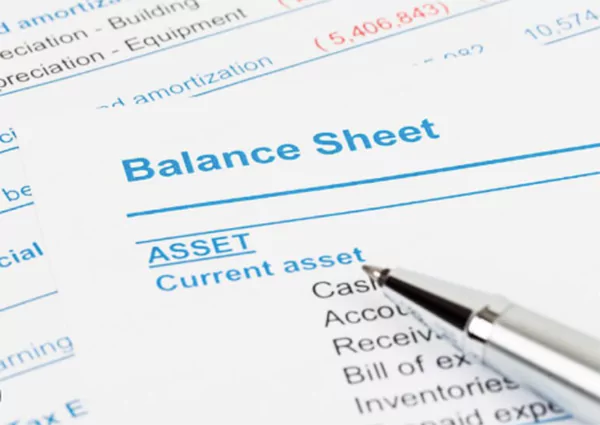
A balance sheet, or statement of financial position, is a list of a company’s assets, liabilities, and shareholders’ equity at a given time. This is meant to give a complete view of the financial position of the company. It is also helpful when businesses aim to build credit for financial growth

It is based on the basic accounting equation: 

Assets = Liabilities + Equity 

This equation makes resources of the company either funded by debt or ownership. 

What are the Elements of Balance Sheet Accounts?

The three major elements of balance sheet accounts are: assets, liabilities, and equity. Businesses often integrate these with systems like payroll services for smoother financial operations.

Assets 

The assets are the resources that the company has, but which are likely to bring about economic benefits in the future. Assets can be classified into:

  • Currency Assets: It consists of cash accounts receivable, inventory, and short-term investments. Many businesses also explore investment services to grow these assets effectively.
  • Non-Current Assets: These are property, plant, machinery, long-term investments, and other intangibles such as IPs and patents. 

Liabilities 

Liabilities are debts that the company has to external parties. They are further classified into:

  • Current Liabilities: These are accounts payable, short-term loans, accrued interest, and other payments. 
  • Non-Current Liabilities: These are long-term loans, lease obligations, and bonds payable. Global businesses may also require international tax services to handle such obligations.

Equity 

Equity represents the owner’s claim on the company’s assets after liabilities are deducted. These are commonly:

  • Company stocks
  • Retained earrings
  • Additional paid-in capital

Balance Sheet Sample and Format  

A balance sheet may be in various forms based on the business and mode of reporting. The structure is, however, the same and adheres to the accounting equation. Entrepreneurs exploring small business ideas often use such samples to understand financial planning.

These are two major forms in use: 

  • Account Format (Horizontal): The assets appear on the left side of the accounting record, and liabilities, along with equity, appear on the right side.
  • Report Format (Vertical): Under this format, the assets are documented first, then the liabilities, and then the equity. This format is more often employed because it is easier and simpler to comprehend.

The two formats make sure that the total assets are always equal to the sum of the liabilities and equity. 

As an example, when assets of a company are valued at $100,000, they can be financed by liabilities of $60,000 and equity of $40,000. This balance provides financial reporting accuracy and facilitates transparency. This balance is especially important during processes like business valuation services.

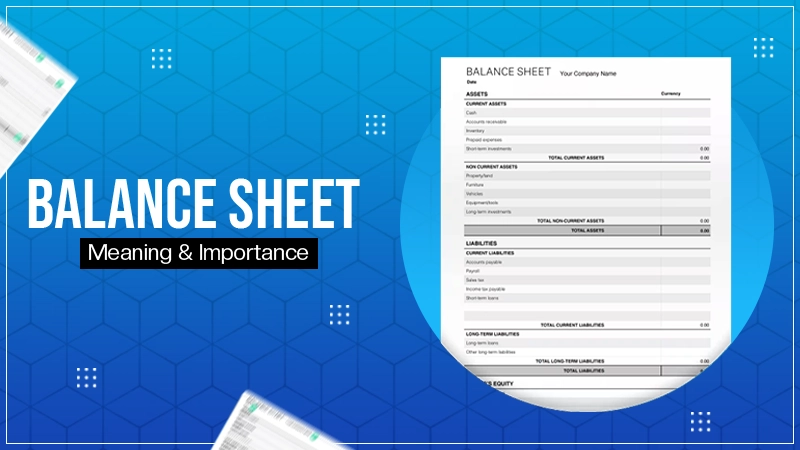
Here’s a balance sheet sample for better understanding: 
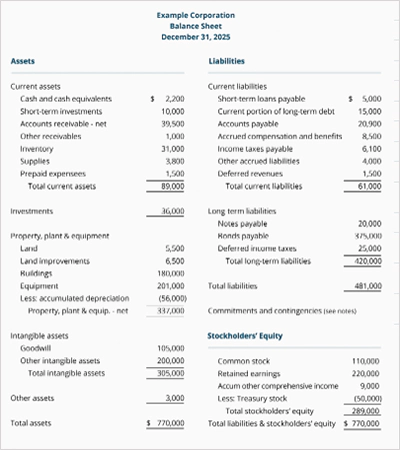
Balance sheet sample

Importance of Balance Sheet 

A balance sheet evaluates the financial health of a business on a deeper level and is widely used by investors and creditors. Thus, it holds great significance; let’s discuss them here: 

  • Evaluates Financial Health: This is the fastest way to reveal what a business has and owes to help identify possible risks and excesses. 
  • Assists Decision Making: Assists management in planning growth, investment, and budgeting. This is because it will give the management a clear picture of the financial situation. 
  • Compliance and Reporting: These are necessary in audits, tax filings, and regulatory compliance, which are legal and accounting compliance. 
  • Main Factor for Investors: It provides complete transparency to stakeholders who consider stability and profitability before they invest their funds. Investors often compare such data with insights from top hedge funds.

How to Read a Balance Sheet?

Reading a balance sheet correctly requires knowledge of the terms and knowing how it needs to be done to get the correct result. 

  • Spot Liquidity: You need to compare the current assets and current liabilities of the company to determine whether it will be able to cover short-term obligations without having any cash flow trouble. 
  • Measure the Financial Stability and Risk: You must look at the long-term liabilities with equities and investments of the company. 
  • Review Equity: Displays net worth and retained earnings, which slows the potential for growth and sustainability of the company. 
  • Compare Periods: You must compare two or more periods because it can be useful to monitor growth and probability and to identify new financial risks. Businesses registered via tools like new york business entity search often use this for compliance tracking.

Common Mistakes of a Balance Sheet 

In the preparation of a balance sheet, some mistakes are likely to be made by businesses, and this may impact the accuracy of the financial statements. The following are some of the typical errors: 

  • Incorrect Classification: The confusion between current and non-current assets or liabilities may make it hard to understand the financial position. 
  • Ignoring Depreciation: Failure to consider the depreciation of assets may exaggerate the assets. 
  • Missing Liabilities: Underreporting may be caused by the failure to document the expenses or unpaid debt. 
  • Poor Record Keeping: The absence of documentation may lead to mistakes in the preparation and audits. 

Many businesses avoid these errors by using professional accounting services.

Weaknesses of a Balance Sheet 

The balance sheet gives an overview of only a period, which can affect looking over the business operations in the past, leading to risk in financial health. Here are some more weaknesses that are associated with only relying on balance sheets: 

  • Gives the picture of a single point in time; it does not demonstrate future cash flow or performance. 
  • The intangible assets, like brand value or IPs, can be underestimated or not recognized. 
  • As it is based on bookkeeping, the inaccuracies in recording may have a profound difference in financial information. 

Final Thoughts and Key Words

A balance sheet is an important instrument of knowledge of the financial position of a business. It is very beneficial in equipping the owners, investors, and lenders with a clear picture of the assets, liabilities, and equity. 

Key Takeaways: 

  • A balance sheet indicates what is owned and owed by a company at a particular time. 
  • It follows the fundamental accounting formula: Assets = Liabilities + Equity.
  • It helps evaluate liquidity, solvency, and financial health. 

FAQs

What is the meaning of a balance sheet?

A balance sheet is a financial statement that indicates things that a company possesses, like assets, what it owes, like liabilities, and what is left, like equity, at a given time. 

What are the three principal elements of a balance sheet?

These three elements are assets, liabilities, and equity. Assets are resources, liabilities are obligations, and equity is the share of the owner in the business. 

What is the importance of a balance sheet?

A balance sheet assists in evaluating the financial strength of a company, gauging its liquidity and solvency, and assisting in the decision-making of investors, creditors, and management.  

Source: 

How to Read & Understand a Balance Sheet by Harvard Business School
Related Posts