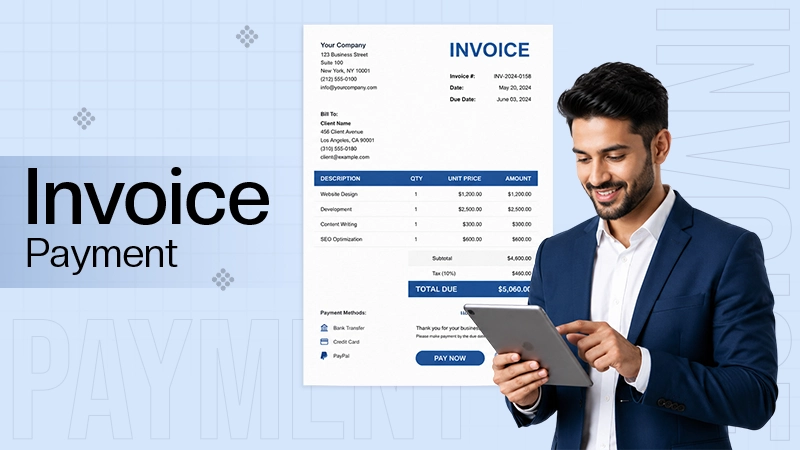


Having cash flow management and solid supplier relationships is essential for the success of any company, and invoice payments are a critical aspect of this. From paying vendors for raw materials, software subscriptions, professional services, and more, an efficient process makes your operations smooth.
But invoices are never as straightforward as transferring funds from one account to another. So this guide will give details on all the aspects of invoice payments and explain how they work.
An invoice payment is when a supplier has issued an invoice for products or services provided, and the invoice has been paid. Once the buyer has reviewed, approved, and paid the invoice, it does not need to be paid again.
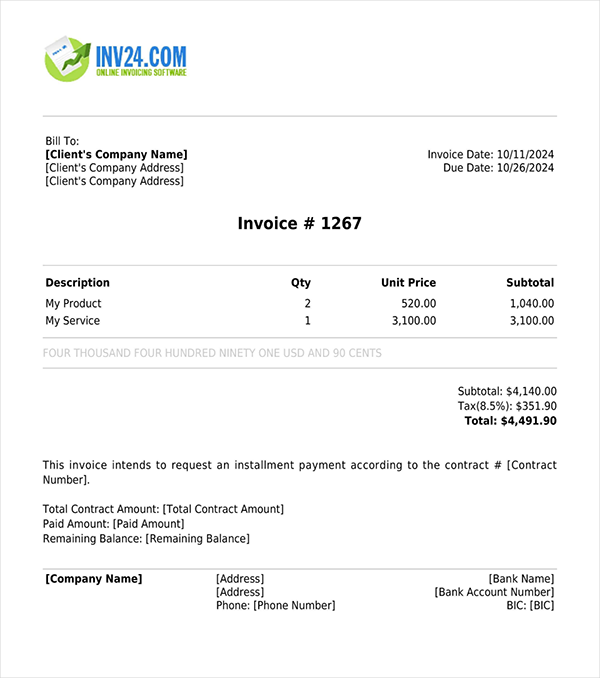
Payment of invoices is one of the most important aspects of accounts payable (AP). They assist businesses in meeting their financial obligations and keep up-to-date with accounting needs.
A sample invoice contains the following details:
Upon approval of the invoice, the payment terms agreed to by the parties will be used to make the agreed-upon payment.
When it comes to paying the bills, it’s more than just about closing out bills. It directly affects business relationships and the financial health of businesses. Plus, it also acts as an important document for sales tax requirements.
An effective payment process for invoices can benefit businesses in the following ways:
Late payment or incorrect payment can impact the relationship of the supplier, result in future delivery delays, and cause unnecessary financial stress.
The invoice payment process is a well-defined journey that guarantees that all payments are valid, correct, and properly authorized.
The process starts with an invoice being sent from a supplier: these can be sent via:
The invoice is written up in the accounting system for tracking purposes.
Businesses double-check the accuracy of the invoice before making payment. This usually includes inspections of:
Any company that has adopted a two-way or three-way matching system, which involves purchase orders and receiving documents. This will avoid overpayment and incorrect charges.
An approved invoice is passed through the approval process. However, approvals can include:
When the invoice amounts surpass the limits, they may need several approvals.
Once approved, the payment is agreed to be paid on a schedule.
Businesses often consider the following:
Timely payments can be processed promptly to maximize working capital and to ensure no late fees are incurred.
Business makes the payment via the chosen payment option. Upon payment:
All the payments made should be recorded. These should be kept by the business for:
Goofs records will make financial reviews in the future far easier.
Check Out: What Is Stagflation? Meaning, Causes, Effects, and Examples
Various suppliers are not all the same when it comes to payment preferences. There are five options to choose from: the choice depends on the cost, speed, and convenience, as well as the security of the choice.
One of the most popular payment options is the bank transfer.
Advantages include:
Normally, it takes a maximum of 1-3 days for the transfer to complete, depending on the banking network.
For periodic business payments, an automated clearing house (ACH) is a widely used payment method.
Benefits include:
ACH payments are particularly convenient for subscription payments from vendors.
Wire transfers allow for quick transfer of money, particularly when sending and receiving across countries.
Advantages are:
The biggest drawback is that it costs more than ACH payments.
Many suppliers accept business cards because of the benefits they offer, which include:
There will, however, be processing fees imposed for both buyer and supplier.
While this is not the most famous option now, checks are still used by some companies.
Advantages include:
The disadvantages are:
The choice of the payment method for the invoice depends on the business requirements and the priority of payment. While selecting one, take into consideration the following factors:
Tolerances for Suppliers: Make sure that your suppliers will accept your chosen payment method.
Transaction Costs: Check out the costs associated with bank transfers, wire transfers, credit cards, or payment platforms.
Processing Speed: You must select the fastest payment methods for time-sensitive and urgent invoices.
Security: You should look for features like encryption, fraud detection, and multi-factor authentication.
Cross Border Payments: If you do business with suppliers worldwide, check on supporting the foreign currency and how many transaction fees are added to the price.
Manual or poorly managed processes can make invoice payments complicated. Some of the common problems that businesses may encounter are:
Some best practices can help companies pay their bills on time and accurately, and enhance the efficiency of all operations.
An effective invoice payment system is crucial to improve good cash flow, relationships with suppliers, and good bookkeeping. Utilizing the right payment methods, following a streamlined process, and implementing automation as much as possible can help decrease errors and late fees while increasing time savings.
By periodically checking and following best practices, you can streamline your accounts payable processes, gain better control of your finances, and contribute to the future success of your company.
Read Next: Top Hedge Funds in the World: Rankings, Strategies, and Insights
The act of preparing and mailing a bill to a customer for goods or services sold. Payment is the process of finalizing that invoice by an agreed means of payment, whether that’s a bank transfer, credit card, or payment service.
When paying an invoice, check the invoice information, the invoice amount, and the due date, select the payment option, and transfer the payment as per the payment instructions stated by the supplier.
Late payment fees, interest charges, and strained supplier relationships are potential consequences of late invoice payment. Failure to pay bills promptly could also impact the credibility of your business.
Sources
- What is an Invoice Payment? Process, Methods, and Challenges – By Razorpay
- Invoice payment methods 101- By Stripe