


While electronic payment options have grown in popularity, paper checks are still used for many transactions, such as salary, refunds, gifts, business payments, and more. Depending on the check, you may need to sign it before you deposit or cash it. Endorsing a check means signing the back of the check so that the bank can pay the check. The process is fairly easy to complete, but it is important to understand how to sign and what endorsement method to use in order to avoid errors, delays, and unauthorized transactions.
Let’s understand how to endorse a check and how to write it properly in this blog!
What Does It Mean to Endorse a Check?
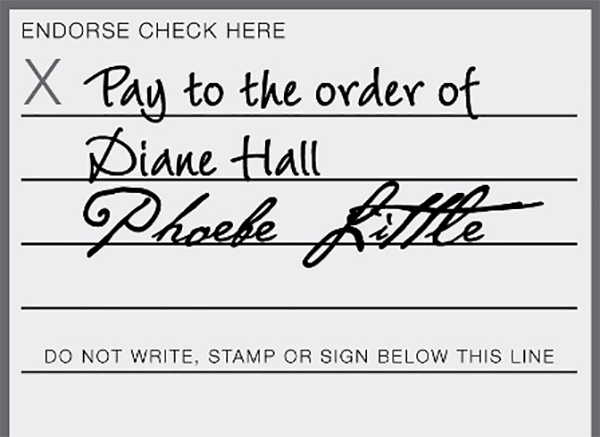
When you endorse a check, you sign the back of the check, giving permission to pass the money on to the check’s payee. It ensures that the individual listed on the check has agreed to the transaction and enables the bank to process the check for deposit or cashing.
Usually, a check endorsement will have the payee’s signature in the space provided on the reverse side of the check. It can also contain other instructions as needed, such as “For Deposit Only” or “For Mobile Only.”
The type of endorsement you use determines how the check can be processed. For example, if a blank endorsement is used, the check may be cashed or deposited, but with a restrictive endorsement, it can be used only for a specific purpose, like depositing it in a bank account.
How to Endorse a Check: Step by Step
It is actually really simple to endorse a check. There are a few critical things to keep in mind, though, to ensure that the bank will accept it without too much of a delay.
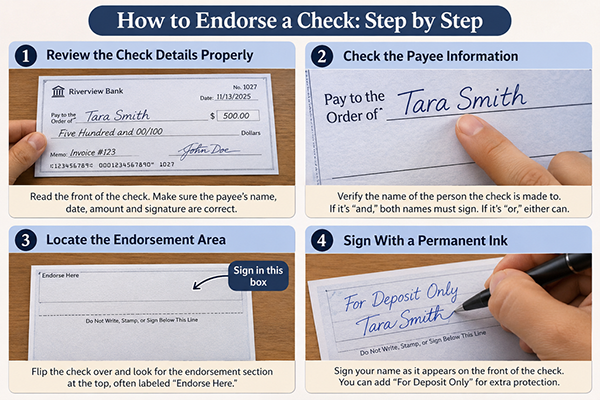
Step 1: Review the Check Details Properly
Before you sign the back, carefully read the front of the check. Ensure the information is correct and complete.
You must check these details carefully:
- Confirm the name of the person you are paying and write it correctly.
- Determine if the date is accurate and if the check is not expired.
- Write the payment amount in words and numbers as per the rules.
- Be sure to have the check signed by the person who will be paying it.
- Look for any restrictions or instructions on the check.
In case you spot an error, notify the individual who wrote it before depositing it.
Step 2: Check the Payee Information
It is important to check the name of the person the check is made to. This is significant because the person to whom the check is made payable is usually the person who would have the authority to endorse the check.
When the check is payable to more than one person, check for the words “and” or “or” between their names. Let’s say if the check is addressed to Josh and Tara Smith, then both people normally require signatures on the check. If it mentions Josh or Tara Smith, then either of them will likely allow it to be endorsed.
The endorsement may, however, vary due to bank policy or accuracy of the check details.
Step 3: Locate the Endorsement Area
Flip the check over and check for a special section at the top. Typically, it has writing like “Endorse Here” or “Sign Here.”
You may find another line below the endorsement section that reads “Do Not Write, Stamp,” or “Sign Below this line.” This area is dedicated to bank processing.
Be sure to sign within the endorsement box and not in the space outside.
Step 4: Sign With a Permanent Ink
Your signature should be the same as the one on the front of the check and the bank account signature you use.
If your name is misspelled, call the bank or check the issuer to ensure that you are endorsing the check the right way. Some banks might ask you to sign the wrong and the corrected versions of your name.
You can also write “For Deposit Only” in addition to your signature if you wish for extra protection, following your bank’s instructions.
Step 5: Deposit the Check in Bank
After you endorse the check, you can give it to your bank for them to cash.
Common options include:
- Bank Branch: Go to your bank branch and present the endorsed check to a representative. Once cleared, it will reflect on your bank statement.
- ATM: Place the check in a suitable ATM that will accept check deposits.
- Mobile Banking: Use your bank’s mobile app to take a picture of the front and back of the check.
Follow your bank’s directions on how to return the check. When opting for mobile deposit, confirm if further endorsement text is necessary.
Different Ways to Endorse a Check
There are different ways to endorse checks. A signature may suffice for a normal deposit, but depending on the circumstances, more directions or permission may be necessary. The purpose of the endorsement will dictate the bank’s ability to cash the check and who will have access to the funds. The following are the most typical ways to write a check endorsement.
1. Blank Endorsement
The simplest endorsement of a check is a bank endorsement. It means you put your name on the back of the check and make no other notation. If a check is written to Emilia Johnson, she only has to sign her name, Emilia Johnson, in the endorsement section.
After it is signed, it can normally be deposited or cashed by the person who holds it, provided that the bank verifies it. This is not as secure as a blank endorsement since if someone has a signed check, they can try to use it.
Used For: When you need to cash or deposit the check right away. Don’t sign it beforehand or leave it out of view.
2. Restrictive Endorsement
A restrictive endorsement conveys the directions for the use of a check. It is generally employed when you wish to have the check deposited in your bank account instead of cashing it.
The most frequent is the endorsement “For Deposit Only” signed by you.
For example:
For Deposit Only
Emilia Johnson (signature)
This instruction is for the check to be deposited and not cashed. It can also help minimize the risk of unauthorized use, depending on banking rules and the bank’s procedures in receiving deposits.
When to Use It: If you’re depositing a check into your bank account, especially if you wish to restrict the treatment of the check.
3. Special or Third-Party Endorsement
If you want to add a third-party endorsement to a check, you can do that with a special endorsement. You don’t deposit or cash it, but you let someone else receive the payment.
If you’re getting a check that’s made out to you but you’d like to make the check out to David Mass, you can write:
Pay to the Order of David Mass
Emilia Johnson (signature)
This enables David to present the check for deposit or cashing with the approval of the bank where the check is to be deposited or cashed.
But third-party checks have their own risks, and some banks won’t accept them or are likely to need both parties to submit identification and extra verification.
When to Use It: For transferring a check to someone else, not depositing it into your account. Never give it to the bank without verifying with them first.
4. Mobile Deposit Endorsement
Mobile deposit endorsement is given to a check made via your bank’s mobile banking app. You can take a picture of the front and back of the endorsement and upload it via the app, without having to go to the bank branch or ATM.
Your signature is required, and some banks will need a special endorsement for “Mobile Deposit Only.” Others might require you to write the name of the bank or other financial institution on the check.
Example of how to endorse a check for mobile deposit:
The following information applies to (Bank Name) Mobile Deposit Only:
Amelie Jackson (signature)
The endorsement requirements differ from bank to bank. Some may ask you to choose a specific account in which you want the check deposited before you send it in.
When It Is Used: On a mobile deposit endorsement for a check deposited via your cell phone banking app. Please read the bank’s directions and ensure that the appropriate wording is used before signing.
5. Business Check Endorsement
If the check is issued to a company (not a person), the person in charge of the company must sign the check in the business’s name. It typically has the business name, representative’s signature, and designation.
For example, an authorized business owner could endorse a check in this way:
- Put the business name the check is for, as it is listed on the front of the check.
- As an authorized representative, enter your signature.
- Now, put the representative’s designation.
- Write “For Deposit Only” or add restrictions as needed.
The bank may request further information or documentation on the company’s business account if it is unsure that you are authorized to sign checks on their behalf.
When It Is Used: Use a business endorsement for a check made out to a business or organization, not a person.
How to Endorse a Check in a Special Situation?
Certain checks need extra consideration given to the written name on the check or the person on whom the check is made out. Below are some instances where check endorsement may vary:
1. Payment to Multiple Payees
When two or more names are listed on the payee line on a check, the endorsement is required as follows:
An example of this is a gift check addressed to Emily and David Johnson; in this case, both parties will almost always have to sign the back of the check. If it’s payable to Emily or David Johnson, though, either may be able to endorse it.
If there is any ambiguity in the check as to whether both signatures are necessary, contact the check issuer or check recipient before signing the check.
2. Names Are Not Correct
There may be a spelling error in the check’s name or a mismatch between the name on the check and your bank account.
If the difference is not significant, the bank might accept the check after confirming the identity. Some banks will, however, call for the payment to cancel the original check and reissue a new one.
Do not make any changes to the payee name. First check with the issuer and your bank to be certain you are signing or depositing correctly before doing so.
3. Checks Made Payable to Someone Else
You should never sign or cash a check unless it is in your name. The transfer must be authorized by the individual who is named as the payee.
In certain situations, they may be able to endorse it to you by a third-party endorsement. But some banks may not be able to cash these checks and might refuse to do so if the check is not endorsed by them.
It’s best to call the original payee’s bank to verify the procedure before sending the check.
Common Mistakes While Endorsing a Check to Avoid
A simple error in endorsing a check may cause pending transactions and delays in processing or rejection. By following the procedure, common problems can be avoided.
Some common errors to be avoided:
- Signature in Wrong Place: Signature must be in the endorsement area on the back of the check. It may be difficult to process when it’s written below the marked line.
- Write in Erasable Ink: Do not write with a permanent ink pen to ensure that the endorsement will not be altered or smudged.
- Don’t Endorse a Check Without Reading Information: Make sure that the name, date, amount, and signature are all correct before signing the check.
- Not Following Instructions for Mobile Deposit: Some banks have specific wording for mobile deposits. If it is not included, it could lead to a failed transaction.
- Signing the Check Before Depositing: If a check is lost before being signed, it’s more likely to be used by someone else.
- Loss of Other Signatures: If a check is payable to more than one person, then it may not be cashed until the appropriate signatures are present.
- Depositing the Same Check Twice: After you have deposited a check using mobile banking or other means, don’t deposit it again. Wait until your bank has confirmed the deposit has cleared before refiling the physical check and adhering to their retention guidelines.
Final Thoughts
Correctly endorsing a check can help you to prevent delays, errors in the deposit, and security issues. The proper endorsement will vary depending on the circumstances for which the check is written and how it’s intended to be used when it’s deposited. Read the check carefully, sign where indicated, and follow all the directions on the check. For special endorsements and third-party checks, check with your bank to see what is required.
We have covered how to endorse a check and common mistakes to avoid in this blog. We hope this information will help you out in complex endorsing situations!
Read Next: Revenue Definition: Meaning, Formula, Types, and Examples
FAQs
Is it always important to sign the back of the check?
The majority of banks will need endorsement to cash or deposit a check. But depending on the policies of the bank, some may take the unsigned check.
Can you deposit a check without endorsing it?
Yes, you can deposit unendorsed checks at some banks, especially if the payee’s name is the same as the account holder. But each bank and each deposit method has its own requirements.
What is the consequence of incorrectly endorsing a check?
A wrong endorsement can lead to the bank holding the account or to the deposit being denied. Check with your bank for help in fixing the error, not changing the endorsement.
What should you write on the back of a check for mobile deposit?
You can write your name and text like “For Mobile Deposit Only”. Make sure to read the instructions on your bank since there may be different endorsement requirements.
Can someone else receive a check that is endorsed for you?
Yes, it is possible to endorse a check to someone else using a third-party endorsement, but the bank to which the endorsement is made should accept this.
Sources:
How to endorse a check – By Chase
How to Endorse a Check – By Experian