


The most significant financial statement that a business uses to gain insight into its income and losses is a profit and loss statement. It indicates the result of the company’s profit or loss for a particular period.
A P&L statement helps you understand how your business is performing, manage costs, make sound business decisions, and determine when growing companies may benefit from CFO services. Let’s get into depth with profit and loss statements in this blog!
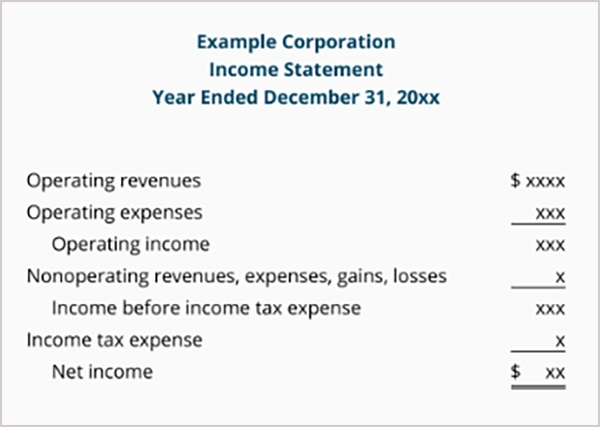
The profit and loss statement provides a snapshot of a business’s income and expenses, and its profits or losses, over a particular period.
Also known as an income statement and profit and loss statement, this report provides a clear picture of how much money a business earns and spends. It will aid business executives in determining if their enterprise is turning in adequate earnings to be profitable.
It is typically created on a monthly, quarterly, or annual basis. By reviewing this report regularly, businesses can get ahead of potential problems and identify financial trends.
The basic equation of the P&L statement is:
Profit or loss = Revenue – Expenses
As long as expenses are lower than revenue, the business makes a profit. When expenses are greater than income, the business makes a loss.
It is crucial to have a profit and loss statement because it shows a business’s financial performance and aids decision-making for the future. Businesses use the statements for several reasons, such as:
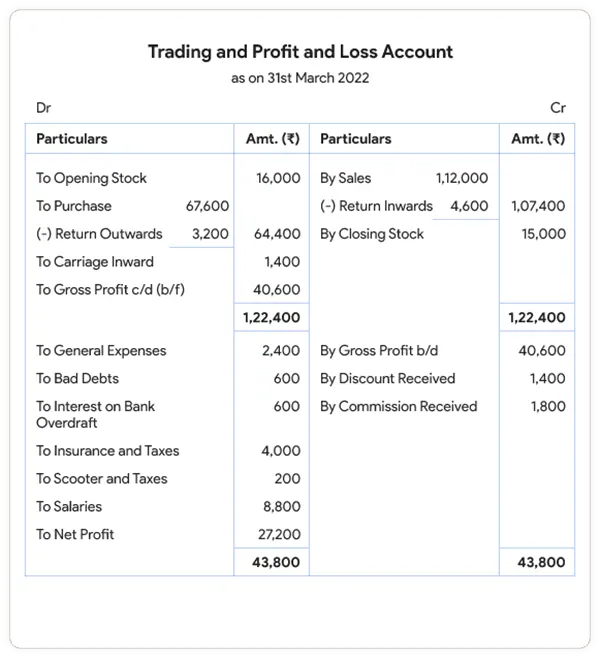
A profit and loss report records all the primary sources of income and expenses that impact a business’s profitability.
While the format may differ, a typical P&L’s definition includes these sections:
Revenue is the money a business generates from sales of its product or service. It is typically the top line of a profit and loss statement and is the company’s total revenue prior to any expenses being applied.
A firm can have a combination of, for instance, the following:
The amount of money that a company spends to produce a product or service. Cost of goods sold is the actual expense of producing or providing a product or service.
Examples include:
You must subtract COGS from revenue to get the gross profit.
Gross profit is the profit which is obtained after deducting the direct production cost.
Gross Profit = Revenue – Cost of Goods Sold
The company’s gross profit is typically high if they are well-managing their production costs.
Operating expenses are the continuing costs that have to be maintained to keep a business going.
Typical common operating expenses are:
Net profit is the profit after any deductions, taxes, and other costs are subtracted.
If it is positive, then the company has a net profit. If it is negative, then it is a net loss.
Check Out: What Is Stagflation? Meaning, Causes, Effects, and Examples
The accounting principle of a P&L statement is to use the income and expenses statement to determine the overall performance of a business.
The profit loss statement is laid out in a straightforward way:
A business, for instance, may have a revenue of $100,000, but its expenses total $70,000, leaving it with a profit of $30,000.
Regularly checking these numbers lets companies know where money is coming from and where it’s going.
A profit & loss statement can be compiled by listing your financial records for a period of time.
Follow these steps:
A lot of businesses have accounting software that will automatically produce profit and loss reports based on what they have recorded.
A profit & loss statement is used to see the performance of any business over a period of time, whereas a balance sheet is used to see the financial position of any business at a particular point in time.
A statement of a P&L is directed at
A balance sheet mainly contains the following:
These financial statements provide a comprehensive picture of a company’s finances.
Every business should regularly analyze its profit and loss statement to keep track of the financial changes and then make the best decisions.
Small businesses might consider monthly P&L reports, whereas larger businesses might look at the reports weekly or quarterly.
Regular audits are beneficial for businesses because:
It will be more difficult to address financial problems if you wait until the end of the year.
By steering clear of the common pitfalls in the P&L, businesses can ensure that their financial records are accurate and that they are making the right decisions for their business.
Here are the common errors:
Read Next: Top Hedge Funds in the World: Rankings, Strategies, and Insights
A profit and loss account is a vital financial statement that aids companies in knowing their revenue and expenditures and their profitability by providing a clear overview of the financial transactions that have occurred within a business during a particular time interval.
Regularly checking a P&L statement allows businesses to make well-informed decisions, control spending, and plan for future expansion. Whether created manually or through accounting software, an accurate profit and loss statement provides valuable insights into a company’s financial health.
The main components of an income statement are revenue, cost of goods sold, gross profit, operating expenses, taxes, and net profit or loss.
An income statement is intended to provide information on a company’s financial performance over a period of time, including its income, expenses, and profitability.
There are two types of income statements: single-step and multi-step. Profit is calculated in a single step by single-step statements and in multiple steps by multi-step statements.
An income statement is read by looking at revenue, expenses, profit margins, and net income to determine if the business is making a profit or not.
An income statement is used in conjunction with the balance sheet and cash flow statement to give a complete picture of the financial position of a business.
Sources:
What Is a Profit and Loss (P&L) Statement? Definition, Types, and Analysis – By Oracle NetSuite
What is a profit and loss statement? – By Xero